01 / UNDERSTANDING DEXA
One technology.
Two complementary views.
DEXA, also written DXA, stands for dual-energy X-ray absorptiometry. It uses two X-ray energies to distinguish fat, lean soft tissue, and bone mineral. The information collected depends on the type of scan performed.
What makes up
your weight.
A whole-body acquisition measures fat and lean tissue and shows their distribution.
Explore Body Composition BONE DENSITYA closer look at
your foundation.
Dedicated hip and lumbar-spine acquisitions assess bone density and help evaluate fracture risk.
Explore Bone DensityThese are separate acquisitions with different purposes. A whole-body composition report does not replace diagnostic hip and spine bone-density testing. OmniWell coordinates the appropriate scans for your goals and clinical needs.
02 / BODY COMPOSITION
Your weight tells
only part of the story.
Two people can weigh the same and have very different body composition. DEXA adds detail to that number, helping us follow changes in fat and lean tissue alongside your training, nutrition, and overall health.
- Total Body Fat
- Fat mass, usually reported in kilograms or pounds, and body-fat percentage. Together, they describe how much of your measured body mass is fat.
- Lean Soft Tissue
- The non-fat, non-bone portion of the scan, including muscle, organs, and body water. This is not a direct measurement of muscle strength or muscle quality.
- Regional Composition
- Where supported, the report separates areas such as the arms, legs, and trunk. Regional measurements add context to the overall totals.
- Fat Distribution
- Some systems report abdominal and hip-region patterns or estimate visceral fat, the fat around internal organs. These additional outputs depend on the scanner and software; they are reviewed when available.
- Bone Mineral Content
- The amount of bone mineral detected in the whole-body scan. This is a composition measurement, distinct from the dedicated bone-density results used to assess osteoporosis.
Connect Composition With Performance
We pair the scan with your DPT evaluation, physical performance testing, and comprehensive nutrition assessment. That connects what your body is made of with how you move, what you can do, and how you fuel your day.
03 / BONE DENSITY
Support the foundation
that keeps you moving.
Bone density can decline without obvious symptoms. Dedicated hip and lumbar-spine DEXA measures bone mineral density, helping identify low bone mass and osteoporosis and informing fracture-risk assessment.
Your physician interprets the findings alongside factors such as age, menopausal status, fracture history, medications, and other health conditions. This creates a more useful picture than a score alone.
- Bone Mineral Density
- BMD is reported in grams per square centimeter (g/cm²). The report identifies the measured sites, typically the lumbar spine, total hip, and femoral neck.
- T-Score
- Compares bone density with a young-adult reference. T-scores are generally used for postmenopausal women and men age 50 and older.
- Z-Score
- Compares bone density with an age- and sex-matched reference. Z-scores are preferred for premenopausal women and men younger than 50. A value of −2.0 or lower is described as below the expected range for age; it does not by itself establish osteoporosis.
Understanding the T-Score
For postmenopausal women and men age 50 or older, the following categories apply to valid diagnostic bone-density measurements.
| T-Score | Classification |
|---|---|
| −1.0 or higher | Normal range |
| Below −1.0 and above −2.5 | Low bone mass (osteopenia) |
| −2.5 or lower | Osteoporosis range |
Fracture history and other risk factors still matter across these categories. When appropriate, your physician may also use a fracture-risk tool such as FRAX to help guide the discussion.
04 / YOUR RESULTS & PROGRESS
Clear measurements.
A meaningful conversation.
Your scan is the starting point for a discussion about where you are today and what you want to improve. OmniWell includes radiologist interpretation and physician review, connecting the results with the rest of your assessment.
Your Composition Report
Fat and lean-tissue measurements, with regional detail where supported. We review the patterns that matter to your goals rather than focusing on a single percentage.
Your Bone-Density Findings
When dedicated bone-density testing is performed, the report provides site-specific BMD and the appropriate T- or Z-scores, with interpretation of the findings.
Your Next Steps
A physician-led discussion of nutrition, resistance training, bone health, and any further evaluation or treatment that fits your circumstances.
Track Meaningful Change
For follow-up scans, using the same facility and scanner where possible helps make comparisons useful. Consistent preparation and positioning also matter. Your team considers measurement precision, including the facility’s least significant change, before treating a small difference as a true change.
05 / PREPARING FOR YOUR SCAN
A straightforward visit.
A useful baseline.
During the Appointment
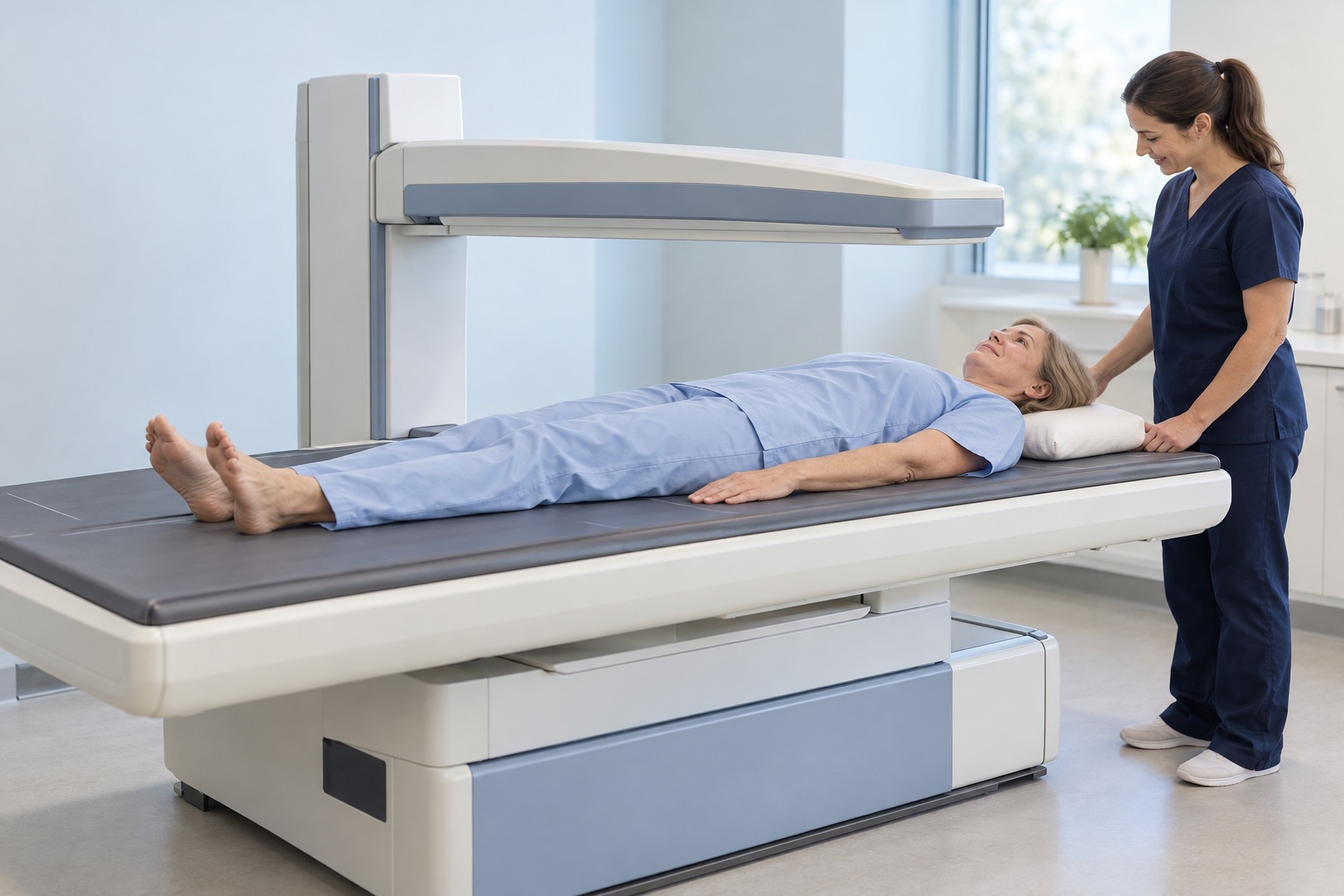
You lie on an open, padded table while a scanner arm passes above you. There is no enclosed tunnel, and routine DEXA does not require an injection or anesthesia. Bone-density examinations commonly take about 10–30 minutes; the imaging team will confirm the time needed for your selected scans.
Clothing & Supplements
Choose comfortable clothing without metal fasteners and follow the facility’s instructions about jewelry. For bone-density testing, you will generally be asked to avoid calcium supplements for 24 hours beforehand.
Consistent Preparation
Body-composition results can be influenced by hydration, recent meals, and exercise. Follow your imaging team’s instructions and aim for similar conditions at repeat visits. Bone-density testing alone usually does not require fasting.
What to Share in Advance
Tell the team if you are pregnant or might be pregnant, have had recent contrast, barium, or nuclear-medicine testing, or have implants or positioning concerns. DEXA uses a small dose of ionizing radiation; pregnancy and recent imaging may affect whether or when the scan is performed.
06 / OMNIWELL CLINICAL PERSPECTIVE
Turn your measurements
into a plan that matters.
The value of an assessment is what you do with it. We bring the findings into a coordinated conversation about your health, your performance, and the life you want to lead.
Nutrition With Direction
Use composition trends and your nutrition assessment to refine fueling, protein intake, and weight-management goals while prioritizing lean-tissue preservation.
Strength With Purpose
Connect DEXA with DPT findings and performance testing to shape an appropriate resistance, weight-bearing, and balance-training plan.
Proactive Bone Health
Review bone density alongside your history, relevant laboratory findings, and fracture risk to decide on further evaluation, nutrition changes, or treatment when indicated.
Progress in Context
Look at changes alongside strength, mobility, energy, and how you feel. The goal is a plan that supports your life, with measurements that help guide it.
Testing Within OmniWell
Signature and Pinnacle include annual DEXA body composition, with dedicated hip and lumbar-spine bone-density testing at baseline as appropriate and again when clinically due. Radiologist interpretation and physician review are included. Foundation offers these assessments through an optional, separately purchased imaging add-on.
View the Full DEXA Assessment Listing →07 / COMMON QUESTIONS
A few useful answers.
Are DEXA and DXA the same test?
Yes. Both abbreviations refer to dual-energy X-ray absorptiometry. The scan order specifies whether the goal is body composition, bone density, or both through separate acquisitions.
How does DEXA differ from BMI or a smart scale?
BMI uses your height and weight. Many smart scales estimate composition using electrical impedance. DEXA uses X-ray measurements to separate fat, lean soft tissue, and bone mineral, with regional information where supported. Results from different methods are not directly interchangeable.
Can DEXA help during a weight-loss program?
It can help track whether changes in weight involve fat, lean tissue, or both. OmniWell uses that information alongside your nutrition and performance assessments to help guide the next phase of your plan.
Will I have bone-density testing every year?
Not automatically. Body composition is included annually in Signature and Pinnacle. Dedicated bone-density testing follows an individualized schedule based on your prior results, risk factors, and any treatment.
What if I have had a DEXA scan elsewhere?
Bring your prior reports, including the dates and scanning facility. Your physician can use them for context and determine whether the measurements are suitable for a direct comparison.
08 / SOURCES & FURTHER READING
Understand the measurements.
Explore the science.
This guide brings together professional guidance on DEXA, bone health, and body composition. Your assessment and follow-up are tailored to your history, results, and goals.